


Key Takeaways
- Memory care provides tailored support for seniors experiencing cognitive decline or dementia.
- Repeated confusion, withdrawal, and safety concerns are signs that it may be time to seek memory care.
- A good memory care community offers meaningful daily activities rooted in long-term memories.
- Family involvement plays a big role in a loved one’s comfort and connection.
- Person-centered care plans and well-trained staff make a real difference in daily life.
- Respite care offers a gentle, low-pressure way to try community life first.
What to Know About Memory Care
Watching a loved one struggle with memory loss is one of the hardest things a family can go through. The confusion, the changed routines, the moments where they seem far away, it’s a lot to carry. Many families wonder when the right time is to look for more support, and what that support even looks like.
Memory care is a form of senior living that offers tailored support for seniors experiencing cognitive decline, memory loss, or dementia, with a focus on comfort, dignity, and meaningful daily connection.
It’s designed for those who need more attentive care than standard assisted living provides. The right community can help a loved one feel grounded, engaged, and genuinely cared for each day. If you’re still weighing your options, exploring how assisted living and memory care differ can help clarify which level of support is the right fit.
Signs Your Loved One May Benefit from Memory Care
Changes in Daily Life to Watch For
It can be hard to know when a loved one’s memory challenges have reached the point where extra support would help. Some signs show up gradually, like forgetting familiar faces, getting turned around in places they’ve known for years, or losing interest in activities that once brought them joy. There are ten early warning signs that can help families recognize when these changes go beyond normal aging.
Withdrawal from relationships is another signal worth paying attention to. When a senior pulls back from conversations, hobbies, or family gatherings they used to look forward to, it often reflects the confusion and frustration that comes with cognitive decline. These changes deserve a thoughtful response, not just reassurance that things will improve on their own.
When Home Care Is No Longer Enough
There’s a point in many caregiving journeys where the support a family can offer at home starts to feel stretched thin. Safety concerns, like a loved one leaving the stove on, wandering, or taking medications incorrectly, can grow faster than a family’s ability to manage them alone.
Caregiver exhaustion is real, and recognizing it is not a sign of failure. Seeking memory care support is often the most loving thing a family can do, both for their loved one and for themselves. It means choosing a team of caring, trained professionals who can be present in ways that round-the-clock family caregiving simply cannot always allow.
What Life Looks Like Inside a Memory Care Community
A Day Filled with Meaningful Activities
Life in memory care is about more than safety and routine. A thoughtful community fills each day with activities that gently connect residents to who they are. Pet therapy, music rooms, movement programs, chapel services, and spiritual gatherings all help residents feel alive, engaged, and at ease. You can take a closer look at the enriching activities available in senior living communities to get a sense of what a typical day might be like.
What sets this approach apart is the focus on long-term memory. Familiar music, meaningful rituals, and sensory experiences can reach a person in ways that ordinary conversation sometimes cannot. When activities are tied to something a resident has always loved, the response can be quietly remarkable.
The Role of Family in Memory Care
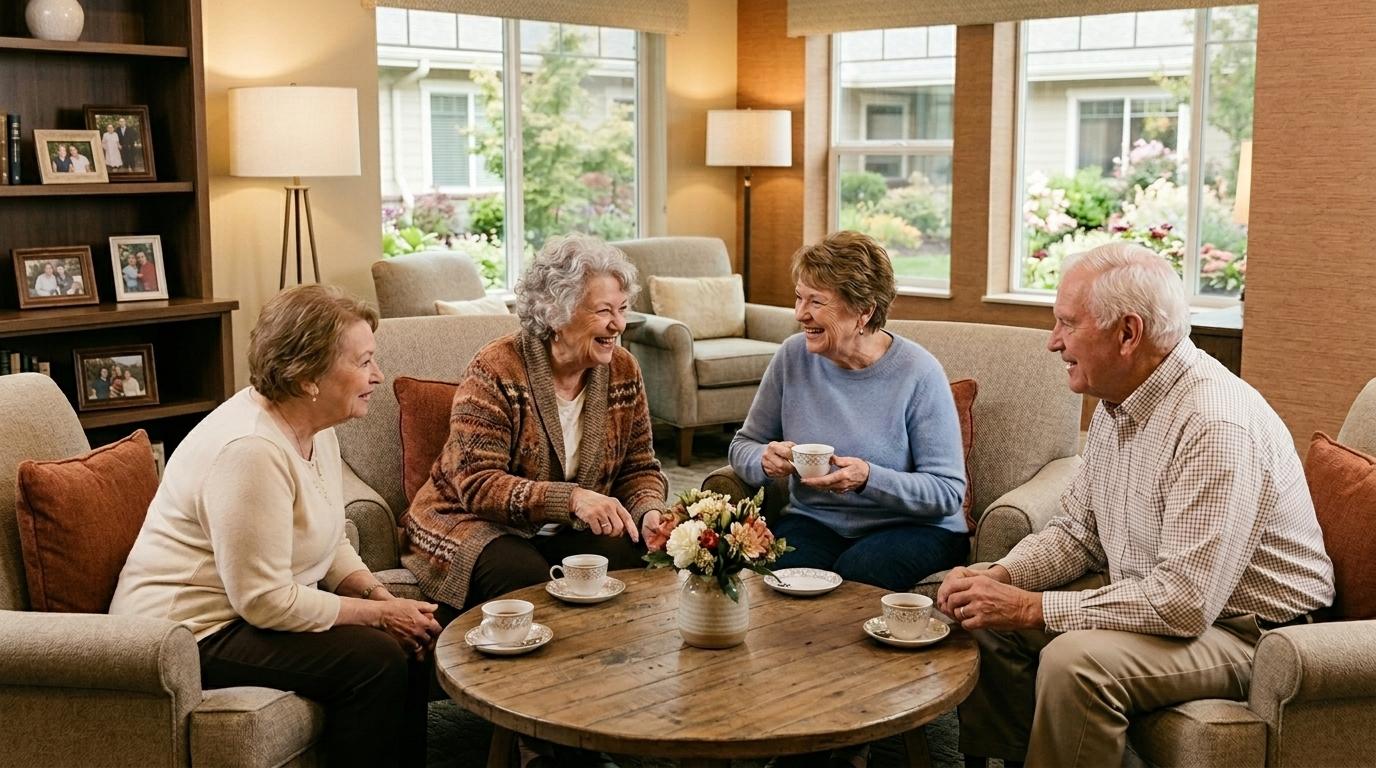
Family does not step back when a loved one moves into memory care. A welcoming community actively invites families in. Shared dining experiences, community events, and open-door visits help families stay close to their loved ones in ways that feel natural and warm. Reading through tips for visiting a loved one in assisted living can give families practical ideas to make those moments feel more meaningful.
Support groups and spiritual services are often available for family members, too, because this journey affects everyone. Knowing that a community sees the whole family, not just the resident, can make a meaningful difference in how supported everyone feels throughout the process.
How to Choose the Right Memory Care Community
Choosing a memory care community is a big decision, and it helps to know what to look for. Person-centered care is a good place to start. A community that builds individualized care plans around each resident’s history, personality, and preferences will deliver a very different experience than one that takes a one-size approach.
The Peregrine Way is one example of how a community can shape its entire approach around the individual needs and life stories of its residents. Ask about staff training and how team members build relationships with residents. The warmth and patience of a care team matter just as much as any amenity.
When visiting, pay attention to how residents seem to feel. Do they appear calm, engaged, and comfortable? That’s often the clearest sign of a community that genuinely prioritizes its residents.
Your Next Step Toward Peace of Mind
Taking a tour of a memory care community can ease a lot of the uncertainty families feel. Seeing the spaces, meeting the team, and watching how residents spend their days gives a picture that no website or brochure can fully capture.
For families who want a gentler introduction, respite care offers a short-term stay that lets a loved one experience community life without a long-term commitment right away.
Peregrine Senior Living at Salisbury welcomes families to come and see what thoughtful, person-centered memory care looks like up close. Reach out today to schedule a tour and take that first reassuring step forward.










No more posts